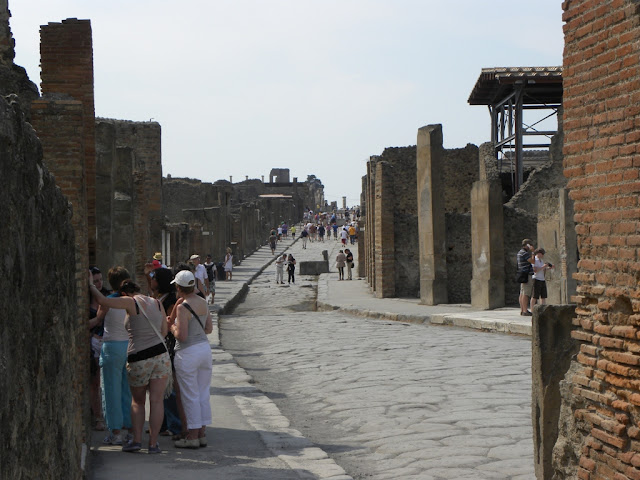
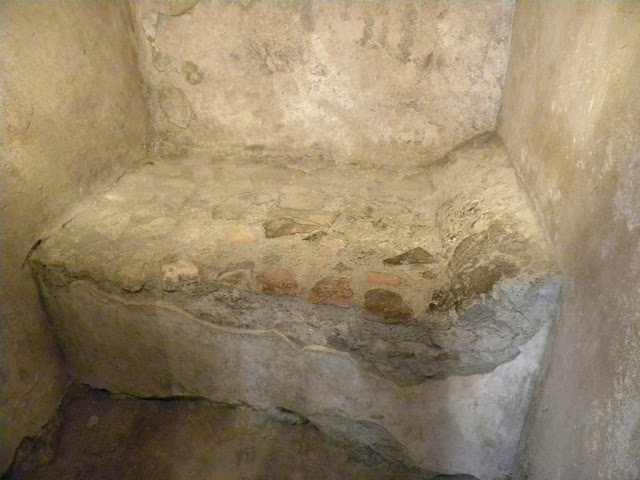
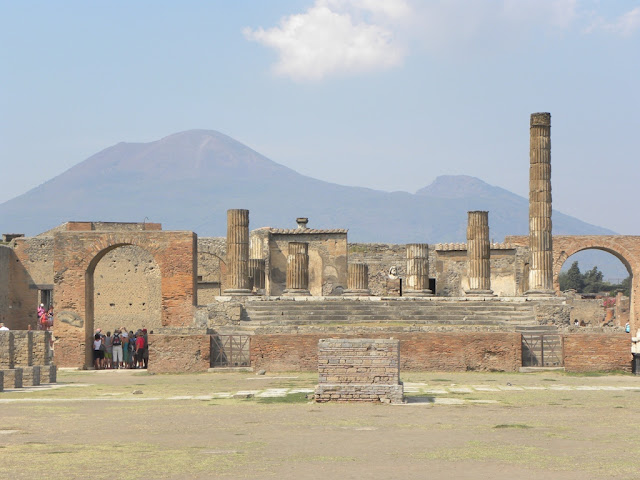
Pompeii was a large city of the Roman Empire with around 20.000 inhabitants, which is located approximately 10 km from the Vesuvius. The Romans living here did not know Vesuvius was a volcano because it looked like a mountain. The crater was not visible and the mountain had a peak of more than 2.000m high. Everything above the crater which is now at 1281m was blow away by a huge explosion. The city was completely covered by ashes in the year 79 when the volcano erupted. It seems that every creature that lived in this area was struck by a cloud of extreme heat of above 500 degrees Celsius and died in extreme conditions. Pompeii was covered under a layer of ashes which was meters high. The town has been brought back to the surface by archaeologists and you can walk in the streets, see the remains of shops, restaurants, sport centres, villas, theatres, bathing houses… We even visited a house of pleasure, where public women offered their services to men, the beds were very small and from stone. Nowadays, we should not complain about our mattresses being too hard. There are still original wall paintings of the services prostitutes were offering. Many travellers couldn’t read or spoke other languages, communicating was difficult, the paintings provided a solution for these problems. It was a special experience, to visit this house. In order to find the brothel, the Romans carved images of a phallus on the roads showing the right direction. Some think the Gods destroyed Pompeii because it was a town of sex and sins. By the way, the new city of Pompeii is a real town where currently 25.000 people live, it is partially build on the remains of the destroyed Pompeii but this was only discovered lately.
Pompeii was een grootstad van het Romeinse Rijk met ongeveer 20.000 inwoners, en ligt op een afstand van 10km van de Vesuvius. De Romeinen die hier woonden wisten niet dat dit een vulkaan was, het zag er uit als een gewone berg. De krater was niet zichtbaar en de berg had een piek van boven de 2.000 meter. Nu zien we duidelijk de krater op een hoogte van 1281 meter, de volledige top van de berg werd weggeblazen door een explosie van de vulkaanuitbarsting in het jaar 79. Het lijkt erop dat alle levende wezens die in deze streek verbleven werden getroffen door een hete lucht golf van meer dan 500 graden en stierven onder verschrikkelijke condities. De stad werd bedolven onder een laag as van verschillende meters hoog. De stad is nu terug opgegraven door archeologen en je kan door de straten van weleer wandelen waar je de overblijfselen ziet van winkels, restaurants, sportcentra, villa’s, theaters, badhuizen... We hebben ook een huis van plezier bezocht, waar publieke vrouwen hun diensten aanboden aan mannen. De bedden waren klein en van steen!!! Wij durven heden ten dage klagen over harde matrassen. Er zijn hier nog steeds muurschilderijen die de diensten uitbeelden die prostituees aanbieden. Vele reizigers kenden de taal niet en dit was de enige wijze waarop hun wensen duidelijk gemaakt konden worden. Het was een speciale ervaring hier binnen te gaan. Om de reizigers te helpen de bordelen te vinden, werden tekeningen van fallussen door Romeinen gekerfd in de bestrating. Deze wezen de juiste richting aan. Sommigen denken dat de Goden deze stad hebben vernietigd omwille van de seks en zonden die hier gepleegd werden. Tussen haakjes, de hedendaagse stad van Pompeii ligt hier ook, heeft ongeveer 25.000 inwoners en is gedeeltelijk gebouwd op de ruïnes van het oude Pompeii, maar dit heeft men slechts recent ontdekt..




 Return to main page


