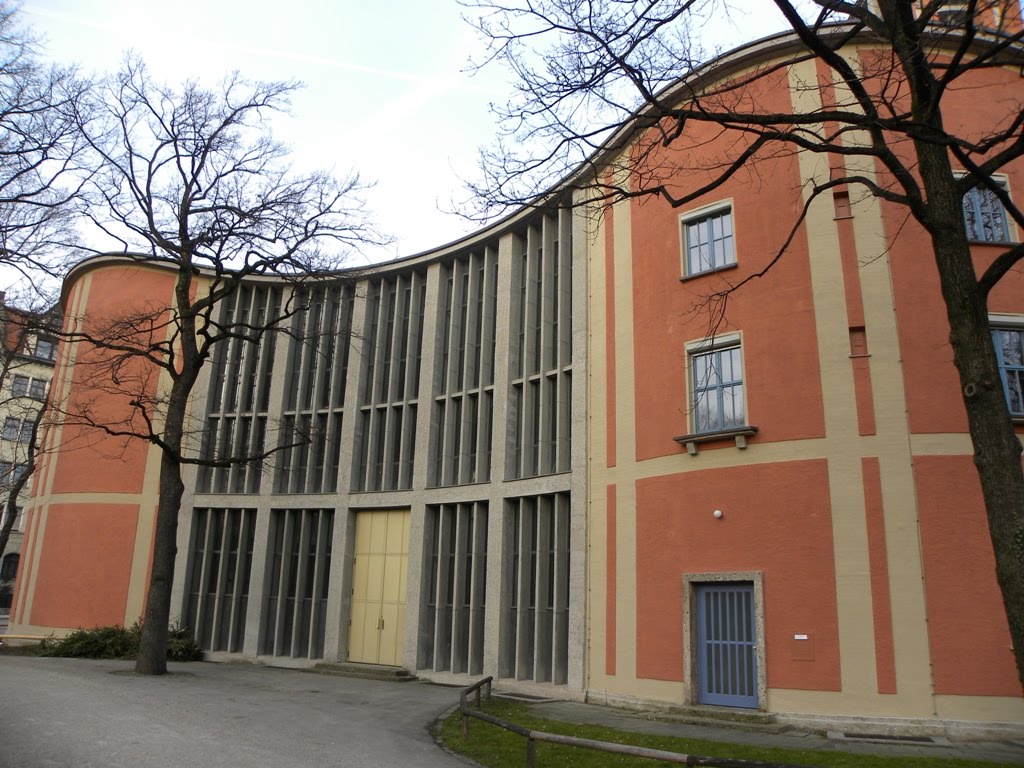
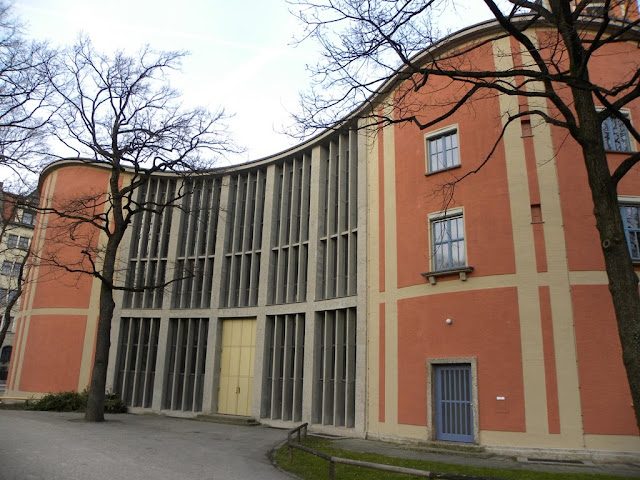
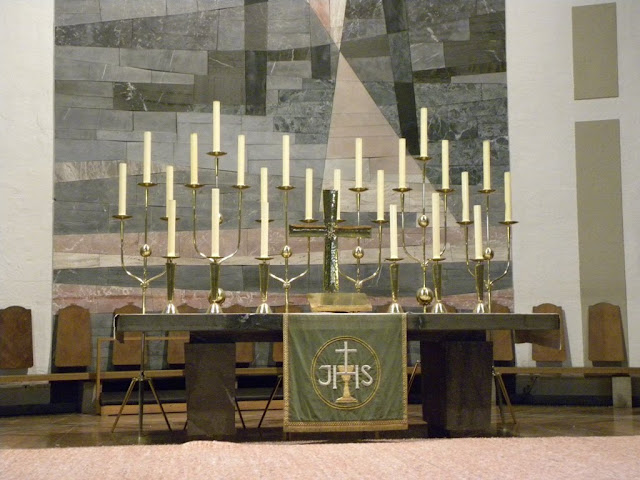
The St. Matthäus church in Munich looks very modern. From the style, you would think it was built only a few years ago but it dates from 1955. The architect was Mr. Gustav Gsaenger. The church interior is very sober but the chandeliers have something special. In the church folder we read that hospitality is very important. When I was young, I didn't like to go to church. In 1988, I stayed in a host family in
Norco, California. They always went to church on Sundays and I had to go along. It was a nice experience, people were a lot friendlier and the church community did activities together. This was my first contact with the Lutheranism church which I thought was founded in the United States. Now I have discovered that
Martin Luther was German and lived in the 16th century. He believed that confessions together with a payment to the church were wrong. He believed in the pure sense of the bible and translated it from Latin into German. His work on hymns lead to the introduction of singing in the church and that was certainly visible in the celebrations I attended in Norco. But enough about Martin Luther, the
St. Matthäus church at Sendlingertor seems to do many good things for the community as described on the official website.
De St. Matthäus kerk in München lijkt zeer recent omwille van haar moderne uitstraling, toch werd ze reeds gebouwd door architect Gustav Gsaenger in 1955. Het interieur is sober maar de lusters hebben toch iets speciaal. De folder van de kerk leert ons dat gastvrijheid zeer hoog in het vaandel wordt gedragen. Toen ik jong was ging ik niet graag naar de kerk. In 1988 verbleef ik in een gastgezin in Norco, California. Zij gingen iedere zondag naar de kerk en ik ging mee. Tegen alle verwachtingen in was het een goede ervaring, mensen waren open, vriendelijk en de kerkgemeenschap deed samen uitstappen. Dit was mijn eerste aanraking met de Lutherse kerk waarvan ik dacht dat de oorsprong terug te vinden was in de Verenigde Staten. Nu heb ik echter ontdekt dat Martin Luther een Duitser was die leefde in de 16de eeuw. Hij vond dat men zijn zonden niet kon afkopen met geld te schenken aan de kerk en te biechten. Hij geloofde in het pure verhaal van de bijbel. Zijn bijbelvertalingen van het Latijn naar het Duits heeft heel wat invloed gehad op het land. Hij lag ook aan de basis van hymnen wat het zingen in kerken heeft ingeleid. Dit was zeker zichtbaar in Norco waar koren en zang centraal stonden in de misviering. Hier zal ik echter stoppen bij het leven van Martin Luther en eindig ik dit artikel met de St. Matthäus kerk aan de Sendlingertor die zich inzet voor veel goede doelen zoals beschreven op hun eigen website..


 Previous Munich article: Mercedes,125 years innovation, Munich
Return to main page
Previous Munich article: Mercedes,125 years innovation, Munich
Return to main page