Showing posts with label Sultan. Show all posts

Friday, 14 June 2013

Harem of around 1.000 girls in the Topkapi Palace, Istanbul

When visiting Topkapi Palace, one needs to realise that you need to pay extra for your Harem entrance ticket. We have to say that it is worth the visit. The tour in the Harem takes at least one hour and you have to know that only 10% of the rooms are open to the public.

Many people know that a Harem is a living area for women of the household of the sultan. This is a very hierarchical society. Young, beautiful and smart girls are selected out of the kingdom and it is an honour for the parents that your daughter was accepted in the Harem. Some girls are there for the maintenance of the palace, some are leaders of the household sections, others favourites of the sultan and spend occasionally the night together, and the highest wives of the Harem have children from the Sultan. The highest ranked woman in the Harem is the mother of the Sultan. For us western men, hard to believe, you have 1.000 women and the one that has most to say is your mother, the ultimate nightmare. Some things never change.

The Harem itself has more than 400 bedrooms, a school for the many female children, two mosques and several bathing facilities. The reason why there are more daughters is that only the first born son of the Sultan was kept alive. The new born sons would be rivals for the Kingdom and were taken away and killed. This has lead to serious conflicts between the wives and the Sultan.

The Harem complex is extremely beautiful with high arches, blue and green mosaic, gold decorations, paintings and lots of luxury. But this was only visible for the wives of the Sultan, between 500 and 1.500 girls. No other men were allowed in the Harem, the outside areas were guarded by the black Eunuchs, castrated men. Once a year, the Sultan saw most of the women of the Harem together when he walked through the Golden Corridor. On that day, he threw golden coins on the floor while passing by. It’s hard to imagine such this difference compared to the modern world today. Some Turks call the Prime Minister of Turkey the new Sultan of the 21st century but he has no Harem.

Als je het Topkapi Palace gaat bezoeken moet je er rekening mee houden een afzonderlijk toegangskaartje te kopen voor de Harem. We dienen te vermelden dat het zeker een bezoekje waard is. Voor de wandeling in de Harem moet je toch iets meer als een uur besteden en dan zijn slechts 10% van alle kamer open voor het publiek.

Vele mensen weten dat een Harem een leefgemeenschap is van vrouwen die de huishouding van de Sultan vormen. Het is een zeer hiërarchische maatschappij. Jonge, mooie en slimme meisjes uit het Koninkrijk worden uitverkoren, een echte eer voor de ouders als hun dochter in de Harem van de Sultan wordt aanvaard. Sommige meisjes zijn daar voor het huishouden, anderen hebben een leidinggevende positie in de dagelijkse bezigheden, anderen zijn favorieten van de Sultan en brengen af en toe de nacht met hem door, een de hoogste in rang zijn de uitverkorenen van de Sultan die zijn kinderen baren. Voor ons hedendaagse westerse mannen is het moeilijk te geloven als je 1.000 vrouwen hebt dat de vrouw die het meest invloed heeft in de Harem, je moeder is, de ultieme nachtmerrie. Sommige dingen veranderen toch nooit.

De Harem bestaan uit 400 kamers, een school voor de dochters, twee moskeeën en verschillende baadfaciliteiten. De reden waarom er enkel dochters waren is dat enkel de eerst geboren zoon van de sultan mocht in de Harem blijven. De andere zonen werden weggerukt van de moeders en gedood, het waren rivalen voor de troon. Dit leidde tot zware conflicten tussen de vrouwen en de Sultan.

Het Harem paleis is zeer mooi met zijn booggewelven, blauwe en groene mozaïeken, gouden versieringen, schilderijen en veel luxe. Dit alles was alleen zichtbaar voor de vrouwen van de Sultan, tussen de 500 en 1.500 meisjes. Geen enkele andere man werd in de Harem toegelaten, de buitenste gebouwen van het Harem paleis werden bewaakt door de zwarte Eunuchen, gecastreerde mannen. Eén maal per jaar liep de Sultan door de gouden gang, waar hij de meeste vrouwen van de Harem samen zag. In het voorbij wandelen gooide hij gouden muntjes op de grond. Het is moeilijk voor te stellen hoe groot het verschil is met de hedendaagse wereld. Sommige Turken noemen de huidige Eerste Minister van Turkije, Dhr. Erdogan, Sultan van de 21ste eeuw, maar hij heeft geen Harem.. 
 
Topkapi Harem, Istanbul

Topkapi Harem, Istanbul

Topkapi Harem, Istanbul

Topkapi Harem, Istanbul

Topkapi Harem, Istanbul

Topkapi Harem, Istanbul

Topkapi Harem, Istanbul

Topkapi Harem, Istanbul

Topkapi Harem, Istanbul

Topkapi Harem, Istanbul

Topkapi Harem, Istanbul

Topkapi Harem, Istanbul

Topkapi Harem, Istanbul

Topkapi Harem, Istanbul

Topkapi Harem, Istanbul

Previous Istanbul article: San Antoine Kilisesi or the Saint Antonius church, Istanbul

Previous Topkapi Palace article: Gate of the Emperor and the gardens of Topkapi Palace

Return to main page

Sunday, 5 May 2013

The tomb and graveyard of Sultan Mahmud II, Istanbul

On the Divanyolu Street, we saw a round monument with a dome and didn’t know what this was. It turned out to be the mausoleum of Sultan Mahmud II and his most important family members. We assume most of the people buried on the graveyard are also family because he had 17 wives and 44 children.

Sultan Mahmud II reigned from 1808 till 1839 and was very lucky he was still alive. He was the second brother in the family and he survived a murder attempt. In early harem traditions, only the oldest son could survive not to have disputes about the throne.

Inside his mausoleum, the coffins are above ground and the dome is spectacular. This is probably only the case for royals because according to Muslim tradition the graves should be simple.

In the graveyard you see many tombs with vertical columns. The highest column represents where the head of the deceased is and it faces the direction of the Kaäba in Mecca. The vertical stones represent the places where the angels land. Only on female graves it is common to put flowers.

Op Divanyolu straat zagen we een rond monument en wisten niet wat het was. Het bleek het mausoleum te zijn van Sultan Mahmud II en zijn belangrijkste familieleden. We veronderstellen dat vele mensen op dit kerkhof afstammelingen van deze Sultan zijn, daar hij 17 vrouwen en 44 kinderen had.

Sultan Mahmud II regeerde van 1808 tot 1839 en kon zich gelukkig prijzen nog in leven te zijn. Hij was de tweede broer in lijn voor de troon en overleefde een moordaanslag als kind. Volgens de vroegere harem tradities werden alle zonen na de troonopvolger vermoord om twisten binnen het rijk te vermijden.

Binnen in het mausoleum staan de graven bovengronds en de koepel is spectaculair. Deze is waarschijnlijk enkel zo voor koninklijke begraafplaatsen want volgens de moslim traditie dient het graf eenvoudig te zijn. 

Op het kerkhof zie je vele graven met verticale zuilen op de grafsteen. De hoogste vertegenwoordigd de plaats van het hoofd van de overledene en kijkt in de richting van de Kaäba in Mekka. De twee verticale zuilen tonen ook de plaats aan waar engelen landen. Het is enkel gebruikelijk bloemen te plaatsen op vrouwelijke graven.. 
 
Tomb Sultan Mahmud II

Tomb Sultan Mahmud II

Tomb Sultan Mahmud II

Tomb Sultan Mahmud II

Tomb Sultan Mahmud II

Tomb Sultan Mahmud II

Tomb Sultan Mahmud II

Tomb Sultan Mahmud II

Tomb Sultan Mahmud II

Tomb Sultan Mahmud II

Tomb Sultan Mahmud II

Tomb Sultan Mahmud II

Previous Istanbul article: Flowers and the Tulip Festival in Istanbul

Previous Cemetery article: Petersfriedhof and the dark catacomben, Salzburg

Return to main page

Wednesday, 14 December 2011

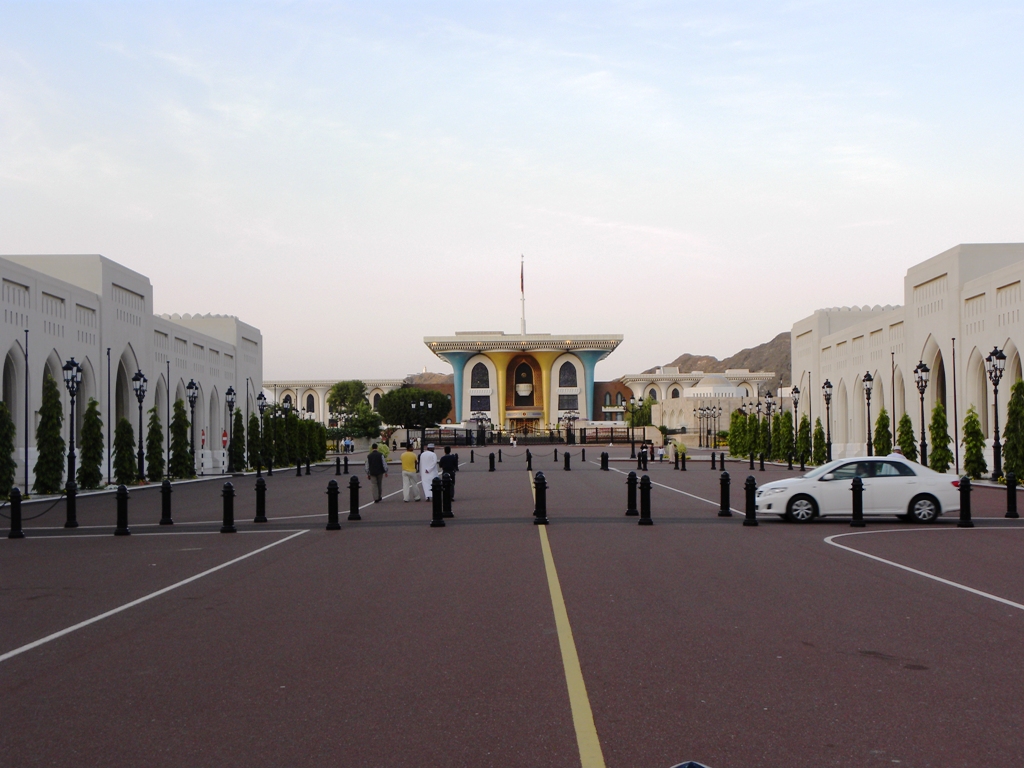
The Palace of Sultan Qaboos bin Said in Muscat, Oman

After a busy few days in Oman, on which we will write during the coming week, we grab a taxi because we still need to see the Royal Palace which is very colourful. The sun light was reducing but we had to go there and take some pictures. Maybe this is our last time in Oman, you never know. The side buildings are in white but the main palace is combination of blue, yellow and gold. It is a small but spectacular building. We had never seen such architecture, it is unique.

Na een paar drukke dagen in Oman, waarover we nog zullen schrijven in de komende week, nemen we snel een taxi daar we het Paleis van de Sultan nog willen zien. De zon gaat snel onder, maar toch willen we deze opportuniteit om foto’s te maken niet laten schieten. Dit zou onze laatste keer in Oman kunnen zijn. De zijgebouwen zijn wit maar het hoofdpaleis is zeer kleurrijk in blauwe, gele en gouden kleuren. Het is een klein maar spectaculair gebouw. We hebben nog nooit zo’n architectuur gezien, het is uniek..

Palace Muscat
Palace Muscat
Palace Muscat
Palace Muscat
Palace Muscat
Palace Muscat
Palace Muscat
Palace Muscat
Palace Muscat
Palace Muscat
Previous Muscat article: The harbour of Muscat and our first impressions of Oman

Return to main page

The harbour of Muscat and our first impressions of Oman

Muscat is the capital of Oman. In this harbour city, Sultan Qaboos bin Said has his palace and in the docks you she the royal yacht. Oman is a country covered by mountain ranges; the translated name for Muscat is the cliffs. The streets are super clean, you find statues and pieces of art along the harbour promenade. On many of the hills, you see forts. The roads are very modern and areas with grass and flowers are well maintained. You find these everywhere in the city and suburbs. Taxis are cheap and people are friendly. We can’t wait to discover this country with its forts, nature and culture. The country opened for tourism in 2004, so this is only 7 years. We never expected we would be here so soon after opening the borders.

Muscat is de hoofdstad van Oman. In de havenstad heeft Sultan Qaboos bin Said zijn paleis en in het dok ligt de koninklijke jacht. Oman is een land bedekt met bergketens, de vertaling van Muscat betekent; de kliffen. De straten zijn ongelooflijk proper, nergens is afval te bespeuren, wel vind je er monumenten, beeldhouwwerken en kunst langs de havenpromenade. Op de heuvels zie je vele forten. De wegen zijn modern en overal aangelegd met grasperkjes en bloemen. Taxi's zijn goedkoop en de mensen zeer vriendelijk. Met ongeduld kijken we uit naar het ontdekken van dit land met zijn natuur, forten en cultuur. Oman heeft zijn grenzen voor toerisme pas geopend in 2004, 7 jaar geleden. We hadden nooit verwacht hier zo vroeg na de start van het toerisme een bezoek te brengen..

Muscat Oman
Muscat Oman
Muscat Oman
Muscat Oman
Muscat Oman
Muscat Oman
Muscat Oman
Muscat Oman
Muscat Oman
Muscat Oman
Return to main page