Showing posts with label Musea. Show all posts

Friday, 29 July 2011

Centre Pompidou in Paris, famous, attracting modern art and entertainment

Centre Pompidou in Paris is a modern building with the appearance of a factory. On the outside you see tubes holding automatic staircases. The centre contains a library and holds exhibitions. Until 19 September you can visit the Paris-Delhi, Bombay exposition. On the square in front of the centre you find strange objects in the shape of wind blowers. They are probably 6 metres high if you look at the picture with me wife. At the side of the building you have a small artificial pond with moving pieces of colourful modern art. We arrived early in the morning and both squares were empty but during the day, many street entertainers are demonstrating their talents. It can be fun to watch or have your portrait drawn or painted by and artist. We can recommend it on a sunny afternoon. Have fun.

Centre Pompidou in Parijs is een modern gebouw met de uitstraling van een fabriek. Aan de buitenzijde zie je grote buizen die roltrappen dragen. Het gebouw heeft een bibliotheek aan verzorgt tentoonstellingen. Tot 19 september kan je hier nog de "Paris, Delhi, Bombay" expositie bezoeken. Op het plein vind je rare objecten in de vorm van windblazers die waarschijnlijk 6 meter hoog zijn als je ze vergelijkt met de foto van mijn vrouw. Op de zijkant van het gebouw ligt een artificieel vijvertje met kleurvolle bewegende kunstwerken. Daar het vroeg in het ochtend was, waren we hier bijna alleen. Gedurende de dag demonstreren vele straatartiesten hun talenten hier. Het kan leuk zijn dit te bekijken of een portret te laten tekenen of schilderen. We kunnen deze plaats aanbevelen op een zonnige namiddag. Veel plezier..

Centre Pompidou Paris
Previous Paris article: Silence there is a church around the corner,Paris

Return to main page

Sunday, 10 July 2011

Royal Delft, the only remaining Delftware factory from the 17th century.

Delfts Bleu is one of the most famous products of The Netherlands. Royal Delft, or the “Porceleyne Fles” is a Delftware factory founded in 1653 and is the oldest of its kind still in operation. You can visit the museum, shop and factory. Here you find many pieces of art. They demonstrate how to bake pottery and paint it by hand. The artists have to follow a training of one year before they master the painting skill. The paint is in fact black, but due to the composition and the heating process the paint becomes blue. The pieces are a bit expensive but it is also possible to buy an item from “Westraven” a subaidiary which works with an industrial painting process. If you go to Delft, you need to visit this factory.

Delfts Blauw is een van de meest beroemde producten van Nederland. Royal Delft of de “Porceleyne Fles” is een Delfts Blauw fabriek uit 1653 en de oudste die nog in gebruik is. Je kan het museum, winkel en de fabriek bezoeken. Hier vind je vele kunstwerken. Tijdens demonstraties tonen ze hoe de potten en borden met de hand worden beschilderd. De kunstenaars moeten hiervoor een volledig jaar in training gaan vooraleer ze deze schilderkunst beheersen. De verf is in feite zwart en wordt blauw door de samenstelling en het bakproces. De aardewerken zijn redelijk duur maar het is ook mogelijk een stuk te kopen van “Westraven” een dochterbedrijf die het aardewerk machinaal spuit. Als je in Delft bent moet je deze fabriek zeker bezoeken..

Royal Delft
Royal Delft
Royal Delft
Royal Delft
Royal Delft
Royal Delft
Royal Delft
Royal Delft
Royal Delft
Royal Delft
Previous Delft article: Crypt of the Dutch Royal family, Delft

Return to main page

Friday, 17 June 2011

Free Rotterdam Harbour Museum, a good tip for visitors

Close to the Erasmus bridge, you find the Rotterdam Harbour Museum. This is a good tip for tourists because it is free of charge. In the Leuvehaven (Leuve Harbour) there is a walking platform between the classic boats and boards indicate the history of each vessel. On the Quay you find an old train and cranes. What we found the most interesting was an old Fire Department boat in flashy yellow. Some of the boats are more than hundred years old and still working.

In de buurt van de Erasmusbrug vind je het Rotterdams Havenmuseum. Dit is een goede tip voor toeristen daar het gratis is. In de Leuvehaven heeft men een wandelplatform gebouwd tussen de klassieke boten en op borden kan je de geschiedenis van iedere boot lezen. Op de kaai staat een oude trein en loskranen. Wat we het leukste vonden was de brandweerboot in felle gele kleuren. Sommige vaartuigen zijn meer dan 100 jaar oud en werken nog steeds..

Rotterdam Havenmuseum
Previous Rotterdam article: Sculpture Trail on the Westersingel, Rotterdam

Return to main page

Tuesday, 25 January 2011

Le Palais des Beaux-Arts et Place de la Republique, Lille

Place de la Republique in Lille is for us the most beautiful square of the city. Here you find the museum Palais des Beaux-Arts, a fabulous building with so many details carved in the facade and underneath the roof. The most famous pieces of art are from Claude Monet, Rembrandt, Van Gogh, Van Dyck and Brueghel. The museum dates from 1892. The houses around the square are impressive, and certainly the one with the two ladies holding the balcony above.

Place de la Republique in Lille is voor ons het mooiste plein van de stad. Hier vind je het Palais des Beaux-Arts (Het paleis der schone kunsten), een fabelachtig gebouw met heel veel details gebeeldhouwd in de facade en onder het dak. De meest bekende kunststukken in dit museum zijn van Claude Monet, Rembrandt, Van Gogh, Van Dyck en Brueghel. De huizen rond het plein zijn indrukwekkend, en zeker het huis met de twee dames die een balkon ondersteunen.

Place de la republique Lille
Palais des Beaux-Arts Lille
Previous Lille article: Place du general De Gaule in Lille

Return to main page

Sunday, 28 November 2010

The Inquisition palace, Cartagena

The Inquisition Palace is one of the most important historical buildings in Cartagena and dates from the late 18th century. So I can not really justify ignoring this museum. However, if there is one reason to lose all faith in the Church it must be the Spanish inquisition. The Spanish and the Roman Catholic Church have robbed Cartagena from all its natural resources and by using the inquisition they stole from the local population to build there fabulous churches in Europe. There was no tolerance; you had to believe in the Roman Catholic Church, if not, you were a witch or devil. Suspects had to undergo imprisonment, torture and death. The rich had to give their money and possessions to the church and they were released. The poor were tortured and murdered in the most extreme ways to frighten all others. You would believe in anything and give all your possessions before any question was asked. It is amazing that more than one billion people in the world are Roman Catholic, and have accepted to support there religious organisation after these criminal acts that lasted centuries. Even in Cartagena the religion is extremely important in the lives of the Colombians. One could question if this is out of fear or conviction. Let's hope this never happens again and that the modern Church will only do good things in people’s lives from now on.

Het Inquisitie Paleis is één van de belangrijkste historische gebouwen in Cartagena en dateert uit de laat 18de eeuw. Zodoende kan ik dit museum niet negeren na ons bezoek. Als er één reden is om al het geloof in de Katholieke Kerk te verliezen moet het wel de Spaanse Inquisitie zijn. De Spanjaarden en de Rooms Katholieke Kerk hebben Cartagena leeggeroofd en door middel van de Inquisitie werd alles gestolen van de lokale bevolking om fabelachtige kerken te bouwen in Europa. Er was geen enkele tolerantie, de bevolking moest geloven in de Kerk, anders was je een heks of duivel. Verdachten werden opgesloten, ondergingen folteringen of werden vermoord. De rijken dienden hun geld en bezittingen af te geven in ruil voor hun vrijheid. Armen werden gefolterd en vermoord onder de meest extreme omstandigheden om de gehele bevolking af te schrikken. Je zou in alles geloven en al je bezittingen weggeven om uit handen van de Inquisitie te blijven. Het blijft verbazingwekkend dat er meer als 1 miljard mensen lid zijn van de Rooms Katholieke die eeuwen deze criminele activiteiten hebben uitgevoerd. Zelfs in het leven van de Colombianen in Cartagena is religie nog steeds super belangrijk. Men kan zich afvragen of dit echt geloven is of diep gewortelde angst uit het verleden. Laat ons hopen dat dit nooit meer gebeurd en dat de moderne Rooms Katholieke Kerk enkel nog maar goede dingen gaat doen voor iedereen op deze wereld.

Inquisition Palace Cartagena

Inquisition Palace Cartagena

Inquisition Palace Cartagena

Inquisition Palace Cartagena

Inquisition Palace Cartagena


Previous Cartagena article: Views of the cathedral of Cartagena

Return to main page

Monday, 14 June 2010

De Ijzertoren, Diksmuide (Yser Tower)

The "Yser Tower" in Diksmuide is a symbol of freedom and peace. It's a place to remind us all never ever to allow war again. The Flemish soldiers at the front were led by French speaking Officers and could not understand them. The Flemish were doomed and disadvantaged by the French Officers. The inscription on the Yser Tower, AVV-VVK means "Alles Voor Vlaanderen - Vlaanderen Voor Kristus" (Everything for Flanders - Flanders for Christ). From this historical background you can understand the current frictions in the cities around Brussels (Flanders) with language facilities for the French speaking.

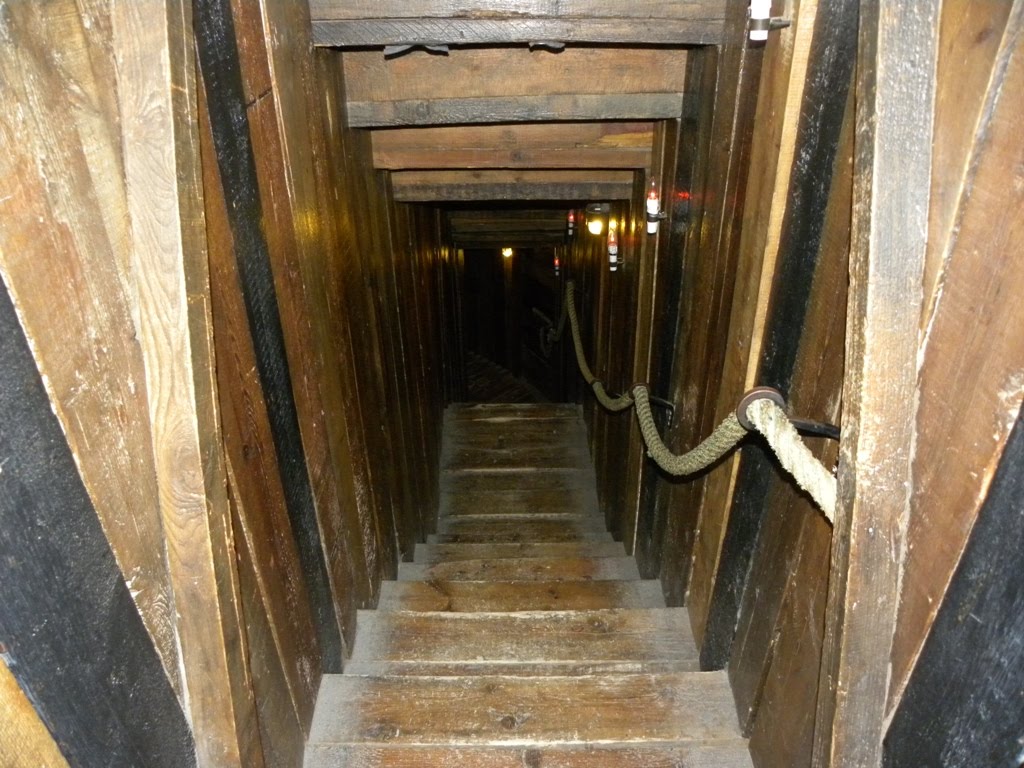
The Yser Tower is 84m high, has 22 floors and is a museum in the memory of World War I. In 1914, the area of Diskmuide was put under water so that the allied troops could stop the German invaders. They held back the Germans for 4 years until the end of the war. During World War I, 10 million people died of which 1 million in this area. People didn't only die because of gun fire but also because of diseases in the trenches. The English soldiers were specialised in building underground Dugouts with sleeping corners, communication facilities and hospitals. A replica of such a Dugout can be visited in the Yser Tower.

De Ijzertoren in Diksmuide is een symbool van vrijheid en vrede. Een plaats om iedereen er aan te herinneren nooit meer oorlog te voeren. De Vlamingen aan het front in Wereldoorlog I werden door de franstaligen geleid die ze niet verstonden. De Vlamingen waren ten dode opgeschreven en werden benadeeld door de Frans sprekenden. Het opschrift op de Ijzertoren AVV-VVK betekent Alles Voor Vlaanderen - Vlaanderen Voor Kristus. Hieruit kan men ook de spanningen begrijpen met betrekking tot de taalfaciliteiten in de Brusselse rand (maar toch Vlaanderen).

De Ijzertoren is 84m hoog, telt 22 verdiepingen en is ingericht als museum ter herdenking van Wereldoorlog I. De omgeving van Diksmuide werd in 1914 volledig onder water gezet zodoende dat de ingegraven geallieerde soldaten beter de Duitse aanvaller tegen konden houden. Dit hebben ze 4 jaar volgehouden. Gedurende Wereldoorlog I stierven ongeveer 10 miljoen mensen waarvan 1 miljoen in de westhoek. Dit was niet alleen door vijandelijkheden maar ook door vele ziektes die men opliep in de loopgraven. De Engelse soldaten waren gespecialiseerd in het bouwen van ondergrondse vestigingen met slaapplaatsen, communicatiemiddelen en hulpposten, de zogenaamde "Dugouts" waarvan een replica te bezichtigen is in de Ijzertoren.

Ijzertoren Yser Tower Diksmuideondergelopen gebied en bunkers

Ijzertoren Yser Tower DiksmuideIjzertoren - Yser Tower

Ijzertoren Yser Tower DiksmuideIjzertoren - Yser Tower
Ijzertoren Yser Tower DiksmuideView from the top of the Yser Tower

Ijzertoren Yser Tower Diksmuidediseases in the trenches - ziektes in de loopgraven

Ijzertoren Yser Tower Diksmuidedugout

Ijzertoren Yser Tower Diksmuidedugout

Previous Flanders War article: The Menin Gate (Menepoort), Ieper

Return to main page

Wednesday, 26 May 2010

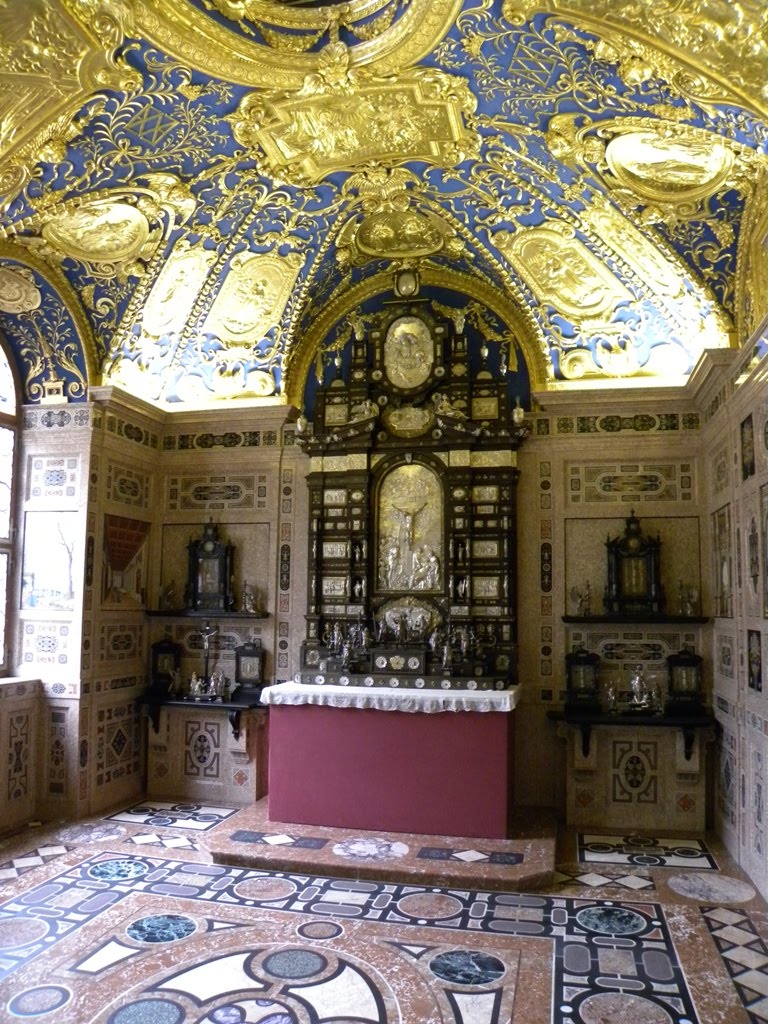
Residenzmuseum, München (The Munich Residence)

The Munich residence was the palace and the political centre for the government and kings of Bavaria. This palace was used from 1623 till 1918 and there are approximately 130 rooms. The palace has many architectural styles because it was build and adjusted during several centuries. The residence was destroyed during World War II and afterwards rebuild. For me, the most impressive rooms are: the Imperial Hall, the Green Gallery and the Antiquarium. When you have time to visit only 1 museum or castle in Munich, I would recommend to going to the Residence.

De Residenz in München was het politieke en koninklijke centrum van Bavaria voor vele eeuwen. Het werd gebruikt van 1623 tot 1918 en heeft ongeveer 130 kamers. Omwille van de persoonlijke voorkeur van vorsten en de lange bouwperiode over verschillende eeuwen, bestaat dit kasteel uit verschillende bouwstijlen. Het paleis werd vernietigd op het einde van de Tweede Wereldoorlog en achteraf heropgebouwd. De kamers die de meeste indruk op mij gemaakt hebben zijn: de keizerlijke hal, de groene galerij, en het Antiquarium. Als je enkel tijd hebt voor 1 museum of kasteel te bezoeken in München, zou ik u aanbevelen naar de Residenz te gaan.

Residenzmuseum, München (The Munich Residence)
Previous Munich article: Olympiapark, Munich

Return to main page