Showing posts with label Life of Jesus. Show all posts

Tuesday, 18 October 2011

The Stone of Unction in the church of the Holy Sepulchre

Travel article Nr. 12 related to the important historical places in the “Life of Jesus”.

In the church you see a replica of the Stone of Unction on which Jesus was laid down after his death in the presence of Mary. The body was cleaned with a sort of oil. This is the 13th station of the Via Dolorosa. The wall paintings in the church are displaying these events from the moment he is taken down from the cross. Many Christians touch the beautiful stone which is a symbol of the preparation process of the body of Jesus before he is taken to his tomb.

In de kerk zie je een replica van de Steen der zalving waarop Jezus lag na zijn dood in het bijzijn van zijn moeder Maria. Het lichaam werd gezalfd met een soort olie. Dit is het 13de station van de Via Delorosa. De muurschilderingen in de kerk tonen duidelijk de gebeurtenissen vanaf de kruisafname. Vele Christenen raken de Steen der Zalving aan die symbool staat voor het voorbereidingsproces van het lichaam vooraleer het naar het graf werd gedragen..

Stone of Unction
Stone of Unction
Stone of Unction
Stone of Unction
Stone of Unction
Stone of Unction
Our travel articles related to the important historical places in the “Life of Jesus”:
1. The Basilica of the Annunciation, Nazareth
2. The House and carpentry of Joseph in Nazareth underneath the Saint Joseph church
3. Grotto of the Nativity - Why Bethlehem instead of Nazareth? The flight to Egypt.
4. Capernaum in Galilee, the Town of Jesus.
5. Baptismal site in the Jordan River where John baptised Jesus.
6. Sermon on the mount, our visit to Mount of Beatitudes.
7. Tabgha, the miracle of the loaves and the fishes.
8. The Mount of Olives, one of the must important places for Jesus and the Jews.
9. The Basilica of the Agony, the evening before the arrest of Jesus.
10. An emotional visit on the Via Dolorosa where Jesus carried the cross.
11. Touching the rock on which Jesus died, the church of the Holy Sepulchre.
12. The Stone of Unction in the church of the Holy Sepulchre.
13. The Tomb of Jesus and the Resurrection, Church of the Holy Selpuchre.

Return to main page

Saturday, 15 October 2011

Touching the rock on which Jesus died, the church of the Holy Sepulchre

Travel article Nr. 11 related to the important historical places in the “Life of Jesus”.

In this article we are describing stations 10 to 12 of the Via Dolorosa: Jesus is stripped of his clothing, he is nailed to the cross, and he dies in front of the eyes of his mother. The cross was erected between two rocks where the blood of Jesus fell on; this is the place visitors want to see and to be near. The rock is inside the church and surrounded by a chapel you can enter via the first floor. Here it is very crowded and people have to wait to approach the site. If the chapel is not full with visitors you have an opportunity to touch the rock where Jesus was crucified. Underneath the altar, there is a hole through which you can put your arm to touch the rock. By doing this, we touched the rock where Jesus died, and in Bethlehem the place where Jesus was born. It was a very special experience.

In dit artikel beschrijven we stations 10 tot 12 van de Via Dolorosa: de kleren van Jezus worden afgenomen, hij wordt aan het kruis genageld, en hij sterft voor de ogen van zijn moeder. Het kruis werd rechtgezet tussen twee rotsen waar het bloed van Jezus op vloeide. Dit is de plaats die bezoekers willen zien en dichtbij willen komen. De rots is binnen in de kerk en er is een kapel rond gebouwd die je kan binnengaan via het eerste verdiep. Als de kapel niet overvol is, heb je de mogelijkheid de rots aan te raken. Onder het altaar, vind je een gat waardoor je je arm kan steken om de rots aan te raken. Door dit te doen, hebben we de plaats gevoeld waar Jezus op gestorven is, en in Bethlehem de plaats aangeraakt waar Jezus op werd geboren. Het was een speciale ervaring..

Jesus dies on the cross, Jerusalem
Jesus dies on the cross, JerusalemOur travel articles related to the important historical places in the “Life of Jesus”:
1. The Basilica of the Annunciation, Nazareth
2. The House and carpentry of Joseph in Nazareth underneath the Saint Joseph church
3. Grotto of the Nativity - Why Bethlehem instead of Nazareth? The flight to Egypt.
4. Capernaum in Galilee, the Town of Jesus.
5. Baptismal site in the Jordan River where John baptised Jesus.
6. Sermon on the mount, our visit to Mount of Beatitudes.
7. Tabgha, the miracle of the loaves and the fishes.
8. The Mount of Olives, one of the must important places for Jesus and the Jews.
9. The Basilica of the Agony, the evening before the arrest of Jesus.
10. An emotional visit on the Via Dolorosa where Jesus carried the cross.
11. Touching the rock on which Jesus died, the church of the Holy Sepulchre.
12. The Stone of Unction in the church of the Holy Sepulchre.
13. The Tomb of Jesus and the Resurrection, Church of the Holy Selpuchre.

Return to main page

Thursday, 13 October 2011

An emotional visit on the Via Dolorosa where Jesus carried the cross

Travel article Nr. 10 related to the important historical places in the “Life of Jesus”.

The 1st and 2nd station don’t exist anymore but it was here that Pontius Pilate in the Antonia Fortress condemned Jesus to be crucified. Jesus wearing a crown of thorns took up the cross and started his climb to the hill of Golgotha. Many Christian believers walk the Via Dolorosa to visit the stations and some of them also carry a cross and read from the bible. We started our walk at the 3rd station were Jesus fell for the first time. At the 4th station, Jesus sees his mother Maria and they acknowledge each other. At the 5th station, a Cyrenian helps Jesus to carry the cross. At the 6th station Veronica cleans the face of Jesus with a veil. At the 7th station, Jesus falls again and the Romans have no mercy. They fear that he would die here. They help him because he should die during the crucifixion. At the 8th station, Jesus comforts the crying women of Jerusalem saying don’t weep for me but for yourselves and your children. At the 9th station Jesus falls again, he can already see the place where he is going to be crucified. The Via Dolorosa is now in downtown Jerusalem, when these events took place this was already outside the city borders. Because of the historical significance of the next events, the following articles are split and describe: The church of the Holy Sepulcher, the Crucifixion, the Stone of Unction, and the Tomb of Jesus. For many people walking this route have difficulties keeping their emotions under control.

Het 1st en 2de station bestaat niet meer, het was hier dat Pontius Pilate in het Antonia Fort, Jezus veroordeelde tot kruisiging. Jezus die een kroon met doorns droeg tilde het kruis op en startte zijn klim naar de heuvel van Golgotha. Vele gelovige Christenen wandelen dezelfde route van de Via Dolorosa om de stations te aanschouwen. Sommigen van hen dragen ook een kruis met zich mee en lezen voor uit de bijbel. Wij starten onze tocht aan het 3de station waar Jezus voor de eerste keer viel. Aan het 4de station ziet Jezus zijn moeder Maria en ze hebben oogcontact. Aan het 5de station helpt iemand Jezus met het dragen van het kruis. Aan het 6de station veegt Veronica met een doek het gelaat van Jezus schoon. Aan het 7de station valt Jezus terug, maar de Romeinen kennen geen genade en helpen hem, hij mag hier niet sterven, dat moet aan het kruis gebeuren. Aan het 8ste station, troost Jezus de vrouwen van Jeruzalem, hij vraagt hen niet te wenen voor hem maar voor zichzelf en hun kinderen. Aan het 9de station valt Jezus terug en ziet hij de plaats waar hij gekruisigd zal worden. De Via Dolorosa ligt nu midden in de stad van Jeruzalem, maar toen dit gebeurde waren we reeds buiten de stadsgrenzen. Vanwege de historische belangrijkheid van de daaropvolgende gebeurtenissen, splitsen we de volgende artikelen op in: de Kerk van het Heilige graf, de Kruisiging, de Steen van de Zalving, en het Heilige Graf van Jezus. Voor vele mensen die deze route wandelen wordt het moeilijk om hun emoties te bedwingen..
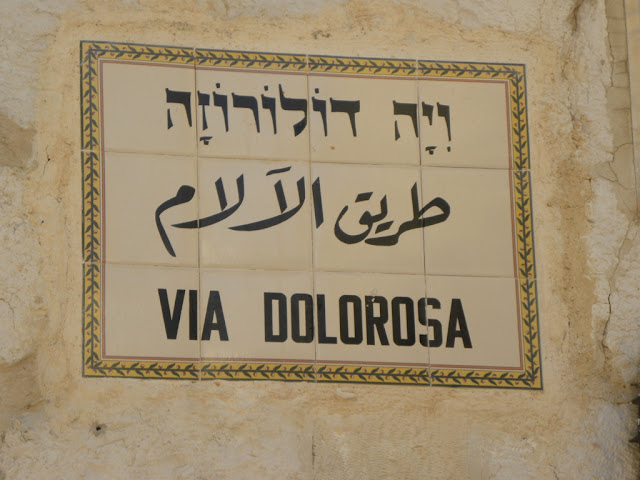
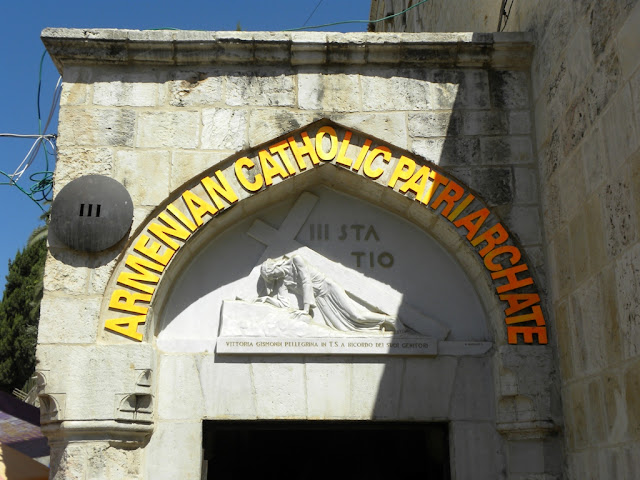
Via Dolorosa Jerusalem
Our travel articles related to the important historical places in the “Life of Jesus”:
1. The Basilica of the Annunciation, Nazareth
2. The House and carpentry of Joseph in Nazareth underneath the Saint Joseph church
3. Grotto of the Nativity - Why Bethlehem instead of Nazareth? The flight to Egypt.
4. Capernaum in Galilee, the Town of Jesus.
5. Baptismal site in the Jordan River where John baptised Jesus.
6. Sermon on the mount, our visit to Mount of Beatitudes.
7. Tabgha, the miracle of the loaves and the fishes.
8. The Mount of Olives, one of the must important places for Jesus and the Jews.
9. The Basilica of the Agony, the evening before the arrest of Jesus.
10. An emotional visit on the Via Dolorosa where Jesus carried the cross.
11. Touching the rock on which Jesus died, the church of the Holy Sepulchre.
12. The Stone of Unction in the church of the Holy Sepulchre.
13. The Tomb of Jesus and the Resurrection, Church of the Holy Selpuchre.

Return to main page

Tuesday, 11 October 2011

The Basilica of the Agony, the evening before the arrest of Jesus

Travel article Nr. 9 related to the important historical places in the “Life of Jesus”.

Jesus knew that a day later he would be arrested. This area on the Mount of Olvies is also called Gethsemane and was the place where Jesus prepared himself for his death. On a rock, he prayed all night and here he left his sweat as blood traces. Many people who come to this church touch the rock to feel connected to Jesus. To reflect the agony and sadness, the church architect has not coloured the stained glass. It gives it a darker impression. The front entrance is in the shape of a Greek temple with fantastic paintings. Inside the church you feel that people are emotioanly affected by the historical events they believe in.

Jezus wist dat hij de volgende dag ging gearresteerd worden. Aan deze plaats op de Olijfberg die ook Gethsemane noemt heeft Jezus zich voorbereid op zijn dood. Op een grote rots heeft hij de hele nacht gebeden, zijn zweet heeft sporen als bloed op de steen nagelaten. Vele mensen komen naar deze kerk om deze rots aan te raken en zich meer verbonden met Jezus te voelen. Om het leed en verdriet beter weer te geven heeft de architect geen kleuren gebruikt in het brandglas, waardoor de binnenzijde van de kerk donkerder wordt. De hoofdingang is in de vorm van een Griekse tempel met zeer mooie muurschilderingen. Binnenin de kerk zie je dat mensen emotioneel geraakt zijn door de gebeurtenissen waarin ze geloven die hier hebben plaatsgevonden..

Basilica of the Agony
Our travel articles related to the important historical places in the “Life of Jesus”:
1. The Basilica of the Annunciation, Nazareth
2. The House and carpentry of Joseph in Nazareth underneath the Saint Joseph church
3. Grotto of the Nativity - Why Bethlehem instead of Nazareth? The flight to Egypt.
4. Capernaum in Galilee, the Town of Jesus.
5. Baptismal site in the Jordan River where John baptised Jesus.
6. Sermon on the mount, our visit to Mount of Beatitudes.
7. Tabgha, the miracle of the loaves and the fishes.
8. The Mount of Olives, one of the must important places for Jesus and the Jews.
9. The Basilica of the Agony, the evening before the arrest of Jesus.
10. An emotional visit on the Via Dolorosa where Jesus carried the cross.
11. Touching the rock on which Jesus died, the church of the Holy Sepulchre.
12. The Stone of Unction in the church of the Holy Sepulchre.
13. The Tomb of Jesus and the Resurrection, Church of the Holy Selpuchre.

Return to main page

Sunday, 9 October 2011

The Mount of Olives, one of the must important places for Jesus and the Jews

Travel article Nr. 8 related to the important historical places in the “Life of Jesus”.

The Mount of Olives was an extremely important place in the life of Jesus. On this hill Jesus came together with the apostles to train them as his followers and spreaders of the word. Sitting on the mount they overlooked Jerusalem and the Temple of David. On the first photo you see the Church of Dominus Flevit built in the form of a tear because at this place Jesus forecasted that the Temple would be destroyed and he cried for it. In those days, the hill was covered with Olive threes. It was also here that Judas betrayed and indentified Jesus by giving him a kiss on the mouth after which he was arrested by Roman soldiers. Instead of Olive threes we now see Jewish graves. Why is this? In our previous article on the Temple Mount we explained that the Jews are waiting for the Messiah. He will come via the valley and make his why to the Golden Gate. This will be the judgement day or the end of days which leads to ever lasting peace. The Jews buried here on the Mount of Olives will be the first to follow the Messiah through the Golden Gate.

De Olijfberg was een uiterst belangrijke plaats in het leven van Jezus. Hier op deze heuvel kwam hij samen met zijn apostelen en vormde hen als volgers en verspreiders van het geloof. Van op deze berg keken ze naar Jeruzalem en de Tempel van David. Op de eerste foto zie je de kerk van Dominus Flevit in de vorm van een traan omdat Jezus hier voorspelde dat de Romeinen de Tempel gingen vernietigen en hij weende. In die tijd stonden hier enkel olijfbomen. Het was ook hier dat Judas verraad pleegde en Jezus aanduidde met een kus op de mond, waarna de Romeinen hem arresteerden. In plaats van bomen zien we nu Joodse graven. Waarom is dit zo? In ons vorig artikel over de Tempelberg schreven we dat de Joden nog wachten op de Messias die langs de vallei zijn weg zal maken naar de Gouden Poort. Die dag is de dag des oordeels of het einde der dagen, wat zal leiden naar eeuwige vrede. De Joden die hier zijn begraven zullen de eerste zijn die Jezus volgen door de Gouden Poort..

Mount of Olives Jerusalem

Mount of Olives Jerusalem
Mount of Olives JerusalemOur travel articles related to the important historical places in the “Life of Jesus”:
1. The Basilica of the Annunciation, Nazareth
2. The House and carpentry of Joseph in Nazareth underneath the Saint Joseph church
3. Grotto of the Nativity - Why Bethlehem instead of Nazareth? The flight to Egypt.
4. Capernaum in Galilee, the Town of Jesus.
5. Baptismal site in the Jordan River where John baptised Jesus.
6. Sermon on the mount, our visit to Mount of Beatitudes.
7. Tabgha, the miracle of the loaves and the fishes.
8. The Mount of Olives, one of the must important places for Jesus and the Jews.
9. The Basilica of the Agony, the evening before the arrest of Jesus.
10. An emotional visit on the Via Dolorosa where Jesus carried the cross.
11. Touching the rock on which Jesus died, the church of the Holy Sepulchre.
12. The Stone of Unction in the church of the Holy Sepulchre.
13. The Tomb of Jesus and the Resurrection, Church of the Holy Selpuchre.

Return to main page

Friday, 7 October 2011

Tabgha, the miracle of the loaves and the fishes

Travel article Nr. 7 related to the important historical places in the “Life of Jesus”.

At the bank of the Sea of Galilee, we find the beautiful church of Heptapegon, or the seven springs. The church is one of many that stood here before to honour the miracle of the loaves and the fishes. Many people followed Jesus to this deserted spot and he talked to them. After a long day, more than 5.000 men and in addition women and children where together with Jesus at this place. Jesus asked his apostles to gather the food they had to feed the crowd but it was limited to 5 loaves and 2 fishes. He each time broke the loaves and fishes and all people had enough to eat. Afterwards there were twelve baskets full of food left for the twelve tribes of Israel. The stone underneath the altar of the church represents the loaves and fishes.

Aan de oever van de Zee van Galilei, vinden we de mooie kerk van Heptapegon, of de kerk van de zeven bronnen. Deze kerk is één van de vele die hier stonden om het mirakel van het brood en de vissen te eren. Grote groepen mensen volgden Jezus naar deze verlaten plek en hij sprak tot hen. Na een lange dag, meer dan 5.000 mannen met aanvullend vrouwen en kinderen waren samen met Jezus op deze plaats. Hij vroeg zijn apostelen eten te halen, maar zij hadden slechts 5 broden en 2 vissen. Keer op keer brak hij het brood en de vissen en alle mensen hadden genoeg te eten. Na de maaltijd bleven er 12 volle manden eten over, voor de twaalf stammen van Israël. De steen onder het altaar stelt het mirakel der brood en vissen voor..

Tabgha church
Tabgha church
Tabgha church
Tabgha church
Tabgha church
Tabgha church
Tabgha church
Tabgha churchOur travel articles related to the important historical places in the “Life of Jesus”:
1. The Basilica of the Annunciation, Nazareth
2. The House and carpentry of Joseph in Nazareth underneath the Saint Joseph church
3. Grotto of the Nativity - Why Bethlehem instead of Nazareth? The flight to Egypt.
4. Capernaum in Galilee, the Town of Jesus.
5. Baptismal site in the Jordan River where John baptised Jesus.
6. Sermon on the mount, our visit to Mount of Beatitudes.
7. Tabgha, the miracle of the loaves and the fishes.
8. The Mount of Olives, one of the must important places for Jesus and the Jews.
9. The Basilica of the Agony, the evening before the arrest of Jesus.
10. An emotional visit on the Via Dolorosa where Jesus carried the cross.
11. Touching the rock on which Jesus died, the church of the Holy Sepulchre.
12. The Stone of Unction in the church of the Holy Sepulchre.
13. The Tomb of Jesus and the Resurrection, Church of the Holy Selpuchre.

Return to main page

Monday, 3 October 2011

Sermon on the mount, our visit to Mount of Beatitudes

Travel article Nr. 6 related to the important historical places in the “Life of Jesus”.

The Mount of the Beatitudes is a hill overlooking the Sea of Galilee. It was here that Jesus preeched the Sermon on the Mount. He said what you need to do to be blessed and go to heaven. On this hill, the Franciscans decided to build a nice church to remember these events. The gardens around the church are beautiful and there are always many visitors. Times were hard and people who listened to Jesus were hungry. In order to get more attendance and being able to concentrate, Jesus decided to provide food for everyone. In the present time, this area is still important to feed the population of Israel. The Sea of Galilee is the only source of drinking water for the whole country and its agriculture. It hardly rains in this country so water consumption is restricted by law.

De “Berg van de Zaligsprekingen” is een heuvel langs de “Sea of Galilee”. Het was hier dat Jezus zijn beroemde “Preek op de berg” bracht. Hij vertelde wat mensen dienden te doen om zalig verklaart te worden en naar de hemel te gaan. Op deze heuvel beslisten de Franciscanen een mooie kerk te bouwen om deze preek te herinneren. De tuinen rond de kerk zijn zeer mooi en er wandelen altijd veel bezoekers. Het waren harde tijden en de mensen die naar Jezus kwamen luisteren hadden honger en niets te eten. Om meer volk te lokken en zodat de mensen zich beter konden concentreerden gaf Jezus hen eten. In de huidige periode is deze streek nog steeds belangrijk voor het voeden van de bevolking van Israël. De Zee van Galilei is de enige bron van drinkwater voor het land en de landbouw. Het regent bijna nooit in Israël en de waterconsumptie wordt beperkt bij wetgeving..

Mount of Beatitudes
Mount of Beatitudes
Mount of Beatitudes
Mount of Beatitudes
Mount of Beatitudes
Mount of Beatitudes
Mount of Beatitudes
Our travel articles related to the important historical places in the “Life of Jesus”:
1. The Basilica of the Annunciation, Nazareth
2. The House and carpentry of Joseph in Nazareth underneath the Saint Joseph church
3. Grotto of the Nativity - Why Bethlehem instead of Nazareth? The flight to Egypt.
4. Capernaum in Galilee, the Town of Jesus.
5. Baptismal site in the Jordan River where John baptised Jesus.
6. Sermon on the mount, our visit to Mount of Beatitudes.
7. Tabgha, the miracle of the loaves and the fishes.
8. The Mount of Olives, one of the must important places for Jesus and the Jews.
9. The Basilica of the Agony, the evening before the arrest of Jesus.
10. An emotional visit on the Via Dolorosa where Jesus carried the cross.
11. Touching the rock on which Jesus died, the church of the Holy Sepulchre.
12. The Stone of Unction in the church of the Holy Sepulchre.
13. The Tomb of Jesus and the Resurrection, Church of the Holy Selpuchre.

Return to main page