Showing posts with label Palace. Show all posts

Monday, 21 August 2017

Palais des Popes in the fortress city of Avignon

It seems the popes had to be seriously defended because the city of Avignon looks like a fortress with in the middle a huge castle. The main entrance is located just beneath a two tower construction. When entering pass have to pass the guards room. The ceiling paintings clearly indicate the weapons used in those days: canons, sables, axes, knifes, spears...

The Palace is enormous and a must visit destination when in Avignon. For us it is the most interesting museum of the city. The complete tour of the castle takes you from the ground floor, to the first and roof. An intense walk. From the top, the views are beautiful.

Het lijkt er op dat de Pauzen zich serieus dienden te beveiligen want Avignon is een oninmeerbaar fort met in het midden een groot kasteel. De hoofdingang is net onder de twee wachttorens gelegen. Wanneer je binnen gaat kom je eerst in de wapenkamer en het soldaten kwartier. De plafondschilderingen tonen ons de wapens van weleer: kanonnen, sabels, bijlen, messen, speren.... 

Het paleis is enorm en dit moet je zeker bezoeken als je in Avignon bent. Voor ons is dit het meest interessante museum van de stad. De rondgang neemt je van het gelijkvloers, naar het eerste verdiep en het dak. Een stevige wandeling. Van hier boven zijn de zichten mooi. 
 
Palais des popes Avignon

Palais des popes Avignon

Palais des popes Avignon

Palais des popes Avignon

Palais des popes Avignon

Palais des popes Avignon

Palais des popes Avignon

Palais des popes Avignon

Palais des popes Avignon

Palais des popes Avignon

Palais des popes Avignon

Palais des popes Avignon

Palais des popes Avignon

Palais des popes Avignon

Palais des popes Avignon

Palais des popes Avignon

Previous Avignon article: General impressions of Avignon

Previous Palace article: Majestic parliament of Vienna

Return to main page

Tuesday, 14 October 2014

Plaza de la Constitución and General Pinochet, Santiago de Chile

Many of the buildings on Plaza de la Constitución were being restored but we got an impression of this important square in the Chilean history. Today most of the ministries and the Presidential Palace are located here.

It was in this palace that President Allende committed suicide in 1973. General Augusto Pinochet took control of the country with military force. The troops and tanks stood in front of the Presidential Palace but the President did not surrender. General Pinochet ordered the Chilean air force to bombard the palace and they did. President Allende took his faith in his own hands.

Veel gebouwen op Plaza de la Constitución ondergingen restoratie maar toch kregen we een indruk van dit belangrijke plein uit de Chileense geschiedenis. Vandaag staan hier de ministeriële gebouwen en het Presidentieel paleis. 

Het was in dit paleis dat President Allende zelfmoord pleegde tijdens de staatsgreep van 1973. Generaal Augusto Pinochet nam het land over met militair geweld. De troepen en tanks stonden voor het paleis maar de President wou zich niet overgeven. Generaal Pinochet beval de luchtmacht het paleis te bombarderen en dit geschiedde. President Allende nam zijn eigen lot in handen. 
 
Plaza de la Constitución Santiago de Chile

Plaza de la Constitución Santiago de Chile

Plaza de la Constitución Santiago de Chile

Plaza de la Constitución Santiago de Chile

Plaza de la Constitución Santiago de Chile

Plaza de la Constitución Santiago de Chile

Plaza de la Constitución Santiago de Chile

Plaza de la Constitución Santiago de Chile

Plaza de la Constitución Santiago de Chile

Plaza de la Constitución Santiago de Chile

Plaza de la Constitución Santiago de Chile

Previous Santiago de Chile article: Neoclassical cathedral of Santiago de Chile

Previous Palace article: Residenzschloss and porcelain museum, Ludwigsburg

Return to main page

Wednesday, 23 October 2013

The Forbidden City and the Last Emperor, Beijing

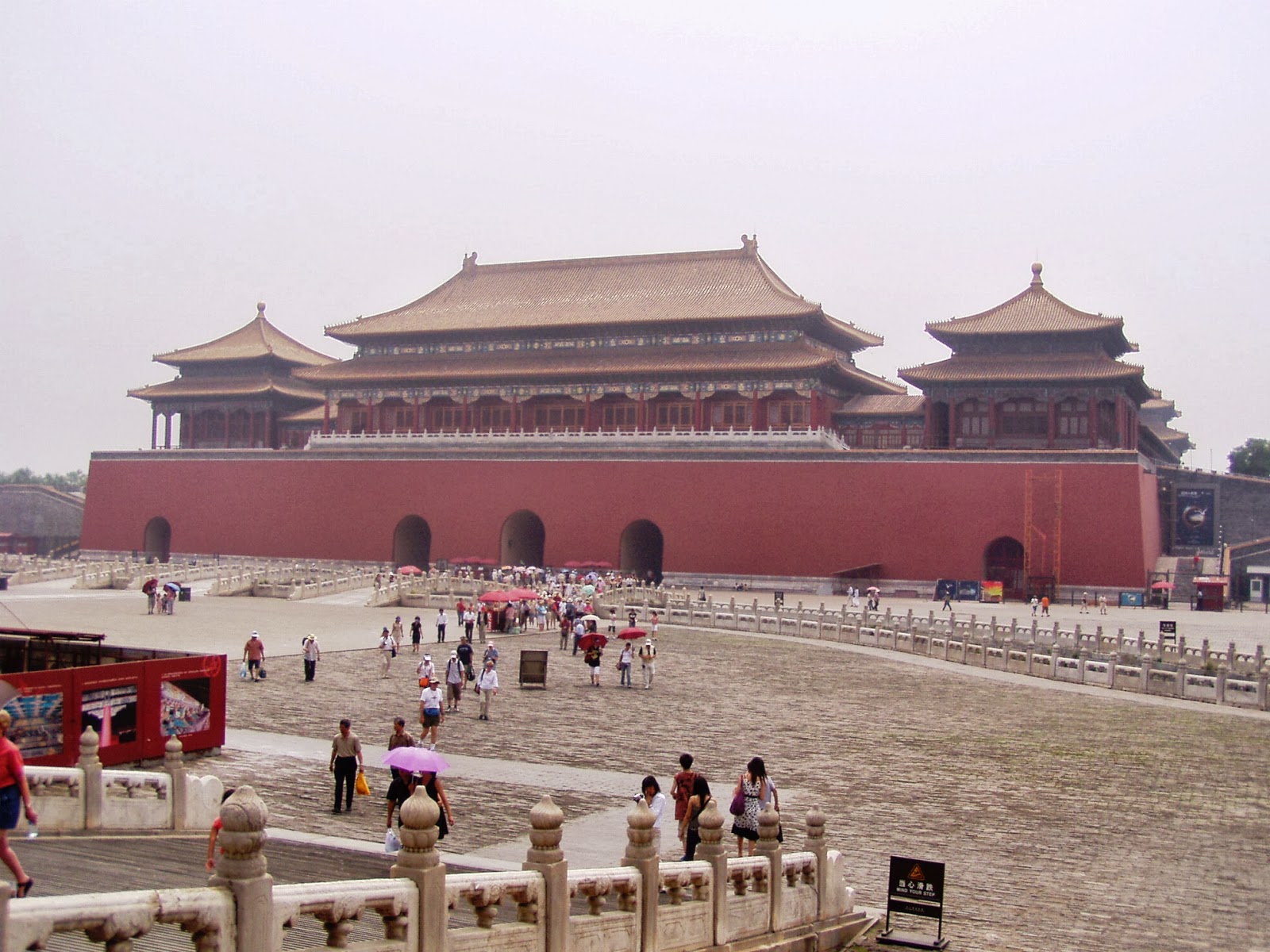
Most of you must have seen or heard of the movie “The Last Emperor” from Bernardo Bertolucci. It is here in the Forbidden City of Beijing that the three year old Pu Yi became Emperor, in fact the last Emperor of the Qing dynasty.

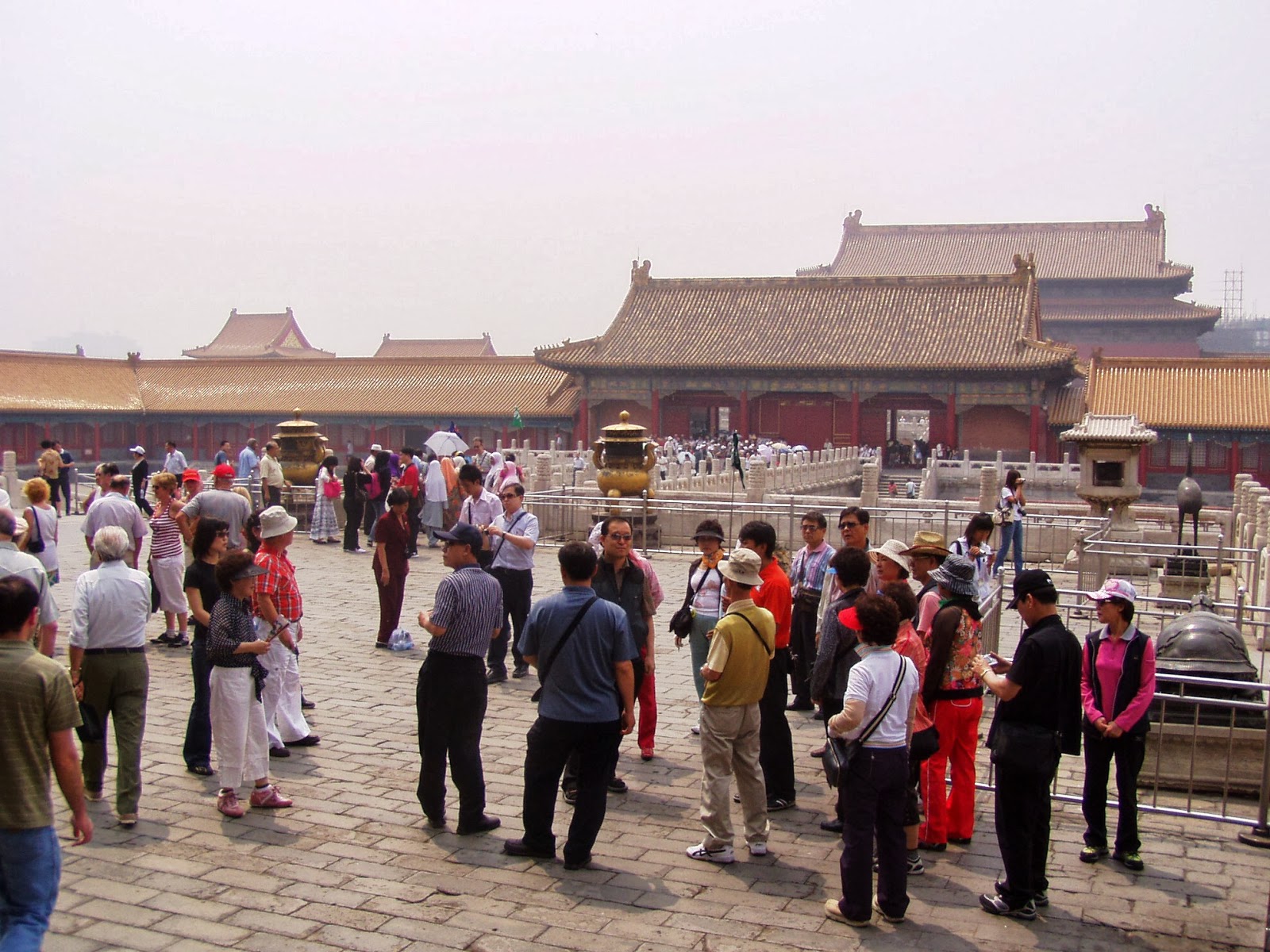
When you are in Beijing you should visit the Forbidden City but go early to avoid crowds. It is in fact a real city, the home of the Emperor and the political life of China. The enormous area with about 1.000 buildings is completely protected by a high defence wall.

The courts are enormous and some parts were only for the Emperor’s family and this could be a very large group. Some Emperors had up to 3.000 wives. No other men were allowed in the family quarters. I will keep it with one wife.

Visiting the Forbidden City takes about half a day. The buildings are enormous, walking from one courtyard to the next one takes time with all these stairs. We were totally blow away from its size and will never forget this.

Velen van jullie zullen wel de film “The Last Emperor” van Bernardo Bertolucci hebben gezien of er van hebben gehoord. Het was hier in de Verboden Stad dat de kleine Pu Yi de laatste Keizer werd van de Qing dynasty.

Als je ooit in Beijing bent, moet je zeker de Verboden Stad bezoeken maar ga heel vroeg om de drukte te vermijden. Het is in feite een tweede stad in Beijing, de thuishaven van de Keizerlijke familie en het politieke hart van China. Het enorme gebied telt bijna 1.000 gebouwen en is volledig omringd door een hoge verdedigingsmuur.

De binnenpleinen zijn zeer groot en gedeeltes van de stad waren enkel toegankelijk voor de grote familie van de Keizer. Sommige Keizers hadden bijna 3.000 vrouwen. Geen andere mannen werden toegelaten in de familiekamers. Ik zal het wel bij 1 vrouw houden. 

Een bezoek aan de Verboden Stad neemt ongeveer een halve dag in beslag. De gebouwen zijn enorm en het wandelen van het ene plein naar het andere met al die trappen duurt toch wel even. We werden volledig overdonderd door de omvang en zullen dit nooit meer vergeten. 
 
Forbidden City Beijing

Forbidden City Beijing

Forbidden City Beijing Golden Lion

Forbidden City Beijing stairs

Forbidden City Beijing

Forbidden City Beijing

Forbidden City Beijing

Forbidden City Beijing

Forbidden City Beijing

Forbidden City Beijing

Forbidden City Beijing

Forbidden City Beijing

Forbidden City Beijing Throne

Forbidden City Beijing

Previous Beijing article: Ballroom Dancing in the streets of Beijing, the capital of China

Previous Palace article: Neuschwanstein Castle and perfect views from the Marienbrücke, Schwangau

Return to main page

Saturday, 10 August 2013

Dolmabahce Palace and the fall of the Ottoman Empire, Istanbul

On the banks of the Bosphorus at the end of Mebusan Caddesi you find the Dolmabahce Palace. It was built in the 19th century by Sultan Abdul Mecit. He tried to increase the confidence in the Ottoman Empire by showing off with his palace. Sultan Mecit had more than 1.000 women in his harem and no time to run the empire. The construction costs were too expensive and the Empire was almost bankrupt.

The revolution was a fact and Turkey was born. Mustafa Ataturk took over the Dolmabahce Palace as his residence and seat of the government. A visit to the palace is only possible with a guide. It is not allowed to take pictures inside but the exterior and gardens are also very beautiful. The interior is just unbelievable.

At night lights illuminate the clock tower, the arched entry gates and the palace. We passed by coming from a restaurant and pulled out a camera to take pictures between the metal bars of the fence. We were into a scare. Within 10 seconds an armed guard stood in front of us. What are you doing? Grrrr. We are taking pictures. Have a nice evening.

Aan de oever van de Bosphorus en het eind van Mebusan Caddesi vind je het Dolmabahce Paleis. Het werd gebouwd in de 19de eeuw door Sultan Abdul Mecit. Hij probeerde het vertrouwen in het Ottomaanse Rijk te verhogen door te pronken met zijn paleis. Sultan Mecit had veel plaats nodig met zijn harem van meer als 1.000 vrouwen. Tijd voor het leiden van zijn rijk had hij niet echter niet genoeg. De bouwkosten waren zo hoog dat het rijk bijna failliet was.

De revolutie was een feit en Turkije werd geboren. Mustafa Ataturk nam zijn intrek in het Dolmabahce Paleis en het werd de zetel van de regering. Een bezoek aan het paleis is enkel mogelijk met een gids en binnen mogen er geen foto’s genomen worden. De buitenzijde en tuinen zijn zeer mooi maar het interieur bijzonder. 

’s Nachts brandt de verlichting op de kloktoren, de inkompoort en het paleis. We kwamen te voet terug van het restaurant en besloten enkele nachtfoto’s te nemen met de camera tussen het metalen hekwerk van het paleis. Binnen de 10 seconden stond er een gewapende soldaat voor ons. Wat doet u hier? Grrr. We willen enkele foto’s nemen. Nog een prettige avond. 
 
Dolmabahce Palace Istanbul

Dolmabahce Palace Istanbul

Dolmabahce Palace Istanbul

Dolmabahce Palace Istanbul

Dolmabahce Palace Istanbul

Dolmabahce Palace Istanbul

Dolmabahce Palace Istanbul

Dolmabahce Palace Istanbul

Dolmabahce Palace Istanbul

Dolmabahce Palace Istanbul

Dolmabahce Palace Istanbul

Dolmabahce Palace Istanbul

Dolmabahce Palace Istanbul

Dolmabahce Palace Istanbul

Previous Istanbul article: That's what we call a market, Egyptian Bazaar, Istanbul

Previous Palace article: Be early to visit the Topkapi Palace, one of the main attractions of Istanbul

Return to main page