Showing posts with label Monastery. Show all posts

Thursday, 30 June 2016

Saint Francis Monastery in Quito

The convent building dominates the whole length of the square. Its facade is bi color in brown and white. We took a very nice picture at the fountain with local people on the square. Unfortunately, it was clouded. Once we entered the building it started raining.

The courtyard garden is constructed in a rectangle shape, completely surrounded by a covered gallery. Trees, bushes and flowers are well maintained. In one of the trees we saw a green red tropical bird.

Het kloostergebouw domineert de volle lengte van het plein. De gevel is tweekleurig in het wit en bruin. We trokken een mooie foto aan de fontein samen met de lokale bevolking. Spijtig dat het zo bewolkt was. Toen we het gebouw betraden begon het te regenen. 

De binnentuin is aangelegd in een rechthoekige vorm, volledig omringt door een overdekte galerij. Bomen, struiken en bloemen zijn goed onderhouden. In één van de bomen zat een groen rode tropische vogel. 
 
Saint Francis Monastery Quito

Saint Francis Monastery Quito

Saint Francis Monastery Quito

Saint Francis Monastery Quito

Saint Francis Monastery Quito

Saint Francis Monastery Quito

Saint Francis Monastery Quito

Saint Francis Monastery Quito

Saint Francis Monastery Quito

Saint Francis Monastery Quito

Saint Francis Monastery Quito

Saint Francis Monastery Quito

Previous Quito article: General Impressions of Quito, capital of Ecuador

Previous Monastery article: Mountain views and General Impressions of Montserrat

Return to main page

Tuesday, 17 May 2016

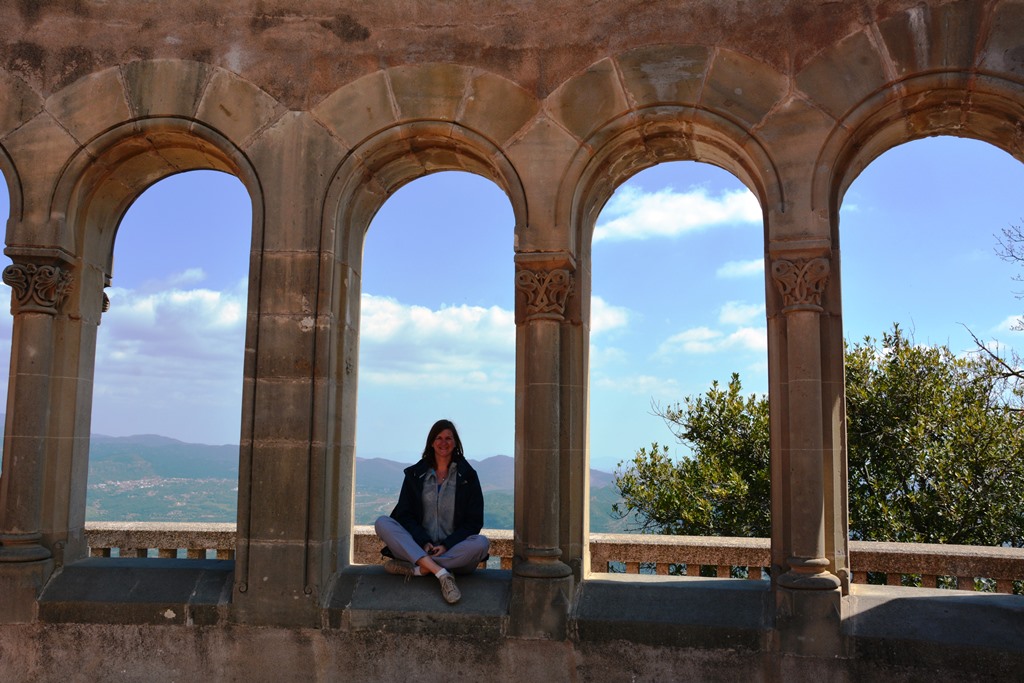
Mountain views and General Impressions of Montserrat

Montserrat is an incredible town, high in the mountains of Catalunya. It was very difficult to find it on the GPS system but we managed. We left our car at the foot of the mountain and made our way up via a cable car.

This monastery and wine village is a unique setting with spectacular buildings and panoramic views. When you decide to go even higher, you are able to take a train to the peak of the mountain, something we really recommend.

Montserrat is een ongelooflijke stad in de Catalaanse bergen. Het was zeer moeilijk te vinden via GPS maar uiteindelijk slaagden we er toch in. Onze auto bleef achter aan de voet van de berg en een kabelbaan bracht ons naar boven. 

Deze klooster- en wijnstad is een unieke plaats met spectaculaire gebouwen en panoramische vergezichten. Als je beslist nog hoger te gaan, kan je een bergtrein nemen tot aan de bergtop, iets dat we zeker aanbevelen. 
 
Montserrat mountains

Montserrat cable car

Montserrat arial view

Montserrat train

Montserrat amazing

Montserrat

Montserrat viewing platform

Montserrat

Montserrat couple

Montserrat rivers

Montserrat arches

Montserrat arch Kristel

Montserrat park

Montserrat statue

Montserrat city from above

Previous General Impressions article: General Impressions of Victoria Island and marine navigation rules

Return to main page

Thursday, 12 June 2014

San Francisco Monastery and the skulls of the Lima catacombs

No we are not yet in the USA but still in Lima. San Francisco refers to the Saint Francisco to whom this church is dedicated. On the square there are a few people with hundreds of pigeons. The façade of the monastery is unbelievable, the sculptures and details are amazing.

Inside the monastery and church we were not allowed to take pictures but the paintings and library were very nice. I would all Lima visitors to go to this monastery. It is worth the visit.

Under the building you find the catacombs. A scary place and the first burial grounds of Lima where about 70.000 deceased people openly lay on the underground cellar. A tradition that we don’t see in many places, it is in fact the first time we visit such a true catacomb.

We end the article with an old Peruvian tradition of collecting skulls. One of the skulls we saw in the catacomb was shinny from the varnish. We wondered why? Older generations believed that taking a skull of a deceased person in house, putting it in a cupboard and showing respect would protect their home. Many families did this but the current generation no longer believes in this tradition. Some families return the skulls to the catacombs when the parents are no longer at home.

Nee, we zijn nog niet in de Verenigde Staten maar nog steeds in Lima. San Francisco refereert naar de Heilige Francisco naar wie deze kerk werd vernoemd. Op het plein zie je enkele mensen en honderden duiven. De kloostergevel is ongelooflijk met zijn vele beeldhouwwerken en details.

In het klooster mochten we geen foto’s nemen maar de schilderwerken en bibliotheek waren heel mooi. Alle toeristen die naar Lima komen zouden deze plaats moeten bezoeken. Het is het zeker waard. 

Onder het gebouw vind je de catacomben. Een angstaanjagende locatie en de oudste begraafplaats in Lima waar ongeveer 70.000 mensen open en bloot in de ondergrondse kelder liggen. Een traditie die je in weinige landen ziet en voor ons is dit de eerste keer. 

We eindigen ons artikel met de Peruviaanse traditie van het verzamelen van schedels. In een mis lag een gelakte schedel en we vroegen ons af waarom dit was. Oudere generaties geloofden dat het bewaren van een schedel in huis, hun bescherming gaf tegen geesten. De schedel werd opgegraven en bewaard in een kast, de bovenkant werd vernist. Heel veel families deden dit maar de huidige generatie geloofd hier niet meer in, eens de ouders het huis verlaten of overlijden worden schedels terug naar de catacomben gebracht. 
 
San Francisco Monastery Lima

San Francisco Monastery Lima

San Francisco Monastery Lima square

San Francisco Monastery Lima pigeons

San Francisco Monastery Lima

San Francisco Monastery Lima

San Francisco Monastery Lima

San Francisco Monastery Lima

San Francisco Monastery Lima

San Francisco Monastery Lima catacomb

Previous Lima article: General Impressions of Lima, the capital of Peru

Previous Monastery article: Exploring the Old Roman district or Barri Gotic of Barcelona

Return to main page

Thursday, 9 January 2014

Exploring the Old Roman district or Barri Gotic of Barcelona

The Roman part of Barcelona was surrounded by a defence wall of which today only the Roman gates still exist. The construction dates from the 4th century. In newer building walls you find ceramic tiles telling religious and cruel stories of executions. The Spanish Inquisition was a leading institute with its courts.

Behind the cathedral and the Palace of the Bishop you find the inner gardens of a monastery. A pond on the courtyard is the living quarter for white geese, there are also a few fountains and the garden landscape is well done. The letter box of the palace is decorated with swallows and a turtle, the turtle represents mail that comes late. In the Carrer del Bishe two 14th century houses are connected by a private pedestrian bridge. We are always surprised to see in how many places the Roman Empire has left its marks behind.

Het Romeins gedeelte van Barcelona was omringd door een verdedigingsmuur waarvan vandaag nog slechts twee poorten bestaan. De constructie dateert uit de 4de eeuw. In jongere bouwwerken zijn soms ceramische tegels ingezet die religieuze en wrede verhalen van terechtstellingen vertellen. De Spaanse Inquisitie met zijn rechtbanken was hier oppermachtig. 

Achter de kathedraal en het Bisschoppelijk Paleis vind je de binnentuinen van een klooster. De vijver op het binnenplein is de leefwereld voor grote witte ganzen, er zijn ook enkele fonteintjes en de tuin is mooi aangelegd. De brievenbus van het paleis is versiert met zwaluwen en een schildpad, deze laatste beeld te late post uit. In de zijstraat Carrer del Bishe worden twee huizen uit de 14de eeuw verbonden door een verhoogde voetgangersbrug. We zijn altijd verrast zoveel Romeinse overblijfselen terug te vinden in Europese steden. 
 
Barri Gotic Barcelona Roman Gates

Barri Gotic Barcelona ceramic tiles

Barri Gotic Barcelona

Barri Gotic Barcelona monastery garden

Barri Gotic Barcelona white geese

Barri Gotic Barcelona monastery fountain

Barri Gotic Barcelona Monastery

Barri Gotic Barcelona swallow and turtle letter box

Barri Gotic Barcelona bridge

Barri Gotic Barcelona

Previous Barcelona article: Architecture, art and entertainment on walking promenade La Rambla

Previous Roman article: Recognised UNESCO Heritage of the Roman Empire in Trier

Return to main page

Friday, 9 August 2013

Monastery of our lady of the snow, Cavtat

This monastery was founded in 1484 but we only had access to the small church located at the seaside. They have a collection of valuable paintings of the 15th century. The interior of the church is simple with a beautiful altar made by Bozidar Vlatkovic and his son, it is more than 500 years old. The preach chair is located in the middle of the ship, about 3 metres above ground level against a white wall. We found this strange for such a small church.

Dit klooster werd opgericht in 1484 maar we hadden enkel toegang tot de kleine kerk gelegen aan het strand. De kloosterlingen bezitten een waardevolle collectie schilderijen uit de 15de eeuw. Het interieur van de kerk is eenvoudig met een bijzonder altaar gemaakt door Bozidar Vlakovic en zijn zoon, het is meer als 500 jaar oud. Het preek gestoelte hangt in het midden van het schip, op een hoogte van 3 meter, tegen een witte muur. We vonden dit merkwaardig voor zo'n kleine kerk. 
 
Monastery of our lady of the snow Cavtat

Monastery of our lady of the snow Cavtat

Monastery of our lady of the snow Cavtat

Monastery of our lady of the snow Cavtat

Monastery of our lady of the snow Cavtat

Monastery of our lady of the snow Cavtat

Monastery of our lady of the snow Cavtat

Previous Cavtat article: General impressions of Cavtat, a Croatian beach town

Previous Church article: Piazza Santa Croce and the cathedral, Florence

Return to main page